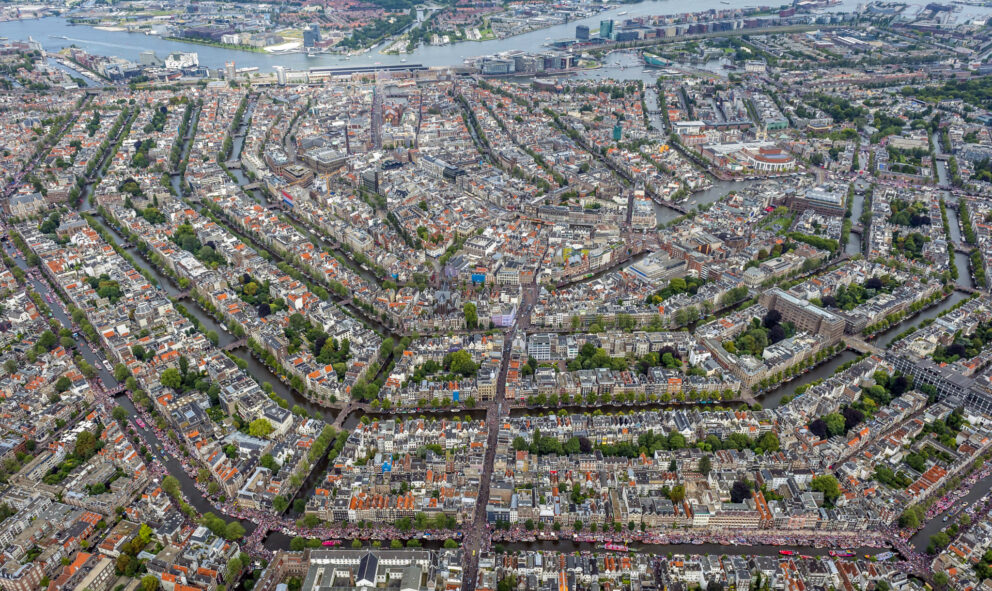
In preparation for the new Environmental Act, which will come into effect in 2022, all major cities in the Netherlands are busy making future plans. Amsterdam and Utrecht recently shared their visions of what the city should look like in twenty to thirty years. The plans differ in parts, but the direction is the same: Far fewer cars, more high-rise buildings, and radical greening.
Cars Removed from the City Streets
One thing is for sure: anyone who lives in the city or comes to visit, shouldn’t count on being able to park their car on the street in the future. Even the many cyclists in the Dutch cities have to be careful: “The bicycle is becoming the new car.”
Removing cars from the city streets creates space for something else, e.g. urban greenery. Parking spaces can be converted into bicycle sheds, playgrounds, or neighbourhood gardens. In a few years, residents will park their car in a parking garage in the neighbourhood. Visitors from outside will park in a “hub” on the outskirts of the city and then continue by bicycle or public transport.
Cultural Change Required
These spaces are not large contiguous pieces, but rather small areas, cut into bits. Urban planners warn that managing all those tiny places is impossible for municipalities and is much too expensive. Wouter Veldhuis, urban planner and member of the Board of Government Advisers that advises central government on regional developments cautions:
“Radically greening a city is only feasible if you dare to entrust the management to residents. But then as a municipality you have to say goodbye to the idea that everything should look like a raked-in park. That requires a cultural change within the municipal system.”
Full report (in Dutch): https://www.volkskrant.nl/nieuws-achtergrond/de-grote-steden-gaan-drastisch-veranderen-minder-auto-s-meer-hoogbouw-en-radicale-vergroening~b45dab65/
Share this article